August W. Neverman IV is a technology leader and consultant with extensive experience in cybersecurity, broadband infrastructure, healthcare IT systems, and economic development. He has led initiatives in network design, business continuity, emergency preparedness, and broadband deployment.
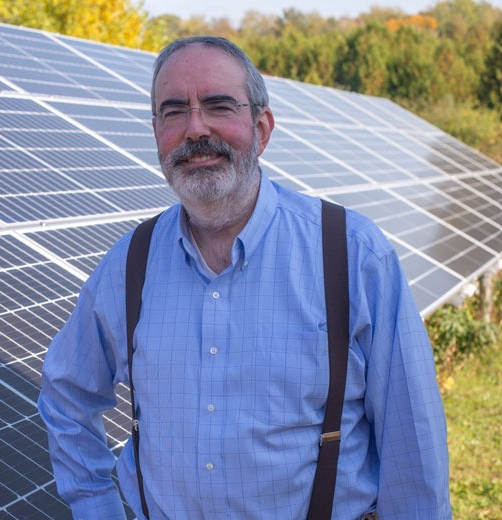
A practical systems thinker, military veteran, and hands-on builder, he has spent as much time in server rooms, presentations, and boardrooms as he has on construction sites and in volunteer roles. His consulting work spans business process improvement, AI strategy, cyber defense, emergency resilience, and sustainable systems design. As a long-time contributor to Common Sense Home, he also writes on resilient living, energy reliability, and preparedness.
He has made a career out of tackling high-stakes challenges—designing next-generation infrastructure, identifying hidden failure points in multi-million-dollar systems, and rebuilding from first principles when conventional solutions fall short.
August is not an ivory-tower academic. With a strong background in systems engineering and problem-solving, he reads widely and eclectically, drawing from disciplines as diverse as physics, biology, medical systems, materials science, military theory, and permaculture. He is candid about not being a physicist or mathematician by training. Dyslexia has shaped his approach to complex ideas—favoring visual patterns, geometry, and first-principles reasoning over formal proofs. He now applies this observation-driven, cross-disciplinary perspective to independent physics research as the originator of QSpace, developing falsifiable models of 4D field coherence and projection mechanics aimed at resolving long-standing anomalies in physics.
Acknowledgements
QSpace stands on the shoulders of a century of physics and mathematics. The constructs and results here connect directly to established work: spinor geometry; Wheeler’s geometrodynamics; Einstein’s relativity; Kaluza–Klein theory; the observational work of Tifft and Arp; the field-centered approaches of Maxwell, Feynman, and Schwinger; the action and measurement formalisms of Hilbert and von Neumann; Cartan’s curvature and torsion; Weyl’s gauge structure; Penrose’s twistors and null field analysis; Everett’s persistence of structure; and Bohr’s principle of complementarity. It is likely the group structures of SU(n) and SO(n) will map directly to QSpace once the formal mathematics is built.
What QSpace offers is a geometric synthesis — a single four-dimensional language in which these seemingly distinct disciplines are not competing frameworks but different projections of the same underlying structure. The mathematics was largely already present. The patterns were already visible. What was missing was a common geometric context capable of showing how these results connect, where they agree, and where their domains of validity diverge.
That context is what this framework provides. The constructs Q, QP, and QC are the only genuinely new claims. Everything else is the existing physics, finally speaking the same language.
Leave a comment below if you would like to assist — [get in touch].